How to Get Nail Glue Off Skin Safely (Without Damage)
Nail glue dries in seconds, so even a tiny press-on mishap can leave a hard patch around the cuticle or bond two fingertips together. The safest response is not to scrape faster or pull harder. If you want to know how to get nail glue off skin, start by softening the adhesive, loosen it gradually, and reserve acetone for glue that remains stubborn.
Most air-drying liquid nail glues contain cyanoacrylate, the fast-bonding adhesive also used in household super glue. A small, dried spot on healthy skin can usually be managed at home. Glue in an eye or mouth, a large spill, blistering, or a hot reaction with clothing needs a different response.
Quick answer: Soak the affected skin in warm, soapy water, then massage in vegetable oil or petroleum jelly. Gently roll the softened glue away—never pull bonded skin apart. For fully dried glue that will not release, use a small amount of acetone-based remover on intact skin, then wash and moisturize.
Check for an Emergency Before You Start
Pause home removal if the glue has reached an eye, eyelid, mouth, nose, broken skin, or a large area. Do not force a glued eyelid or lip open. For eye exposure, rinse with water for 15 minutes and seek case-specific advice; an eyelid glued shut requires urgent medical assessment. In the United States, Poison Control is available at 1-800-222-1222 or through its online help service. Readers elsewhere should contact their local poison center or urgent medical service. MedlinePlus provides additional cyanoacrylate first-aid guidance.
Treat sudden heat, intense pain, blistering, whitening or charring of the skin as a possible burn—not an ordinary glue spot. This is especially important if wet nail glue is soaked into cotton or wool. Cyanoacrylate can react rapidly with these fibers and release enough heat to cause a serious thermal burn. Immediately flood the area with cold, soapy water, do not tear away fabric stuck to the skin, and obtain medical advice.
What You Need for Safe Nail Glue Removal
Begin with the mildest supplies and move to a stronger option only if needed:
- A bowl of comfortably warm, not hot water
- Mild hand soap
- Vegetable, olive, coconut, or cuticle oil
- Petroleum jelly as an alternative to oil
- Acetone-based nail polish remover for a stubborn, fully dried spot
- A rich fragrance-free hand cream or cuticle oil for aftercare
Check the adhesive label before starting. This guide applies to common air-drying liquid nail glue. A product labeled UV/LED nail glue gel is a different adhesive system; uncured gel on skin can require product-specific cleanup, so follow its label or ask a qualified nail professional. Also confirm that any polish remover actually contains acetone—an acetone-free remover may not dissolve cyanoacrylate effectively.
How to Get Nail Glue Off Skin Step by Step
1. Soak the Skin in Warm, Soapy Water
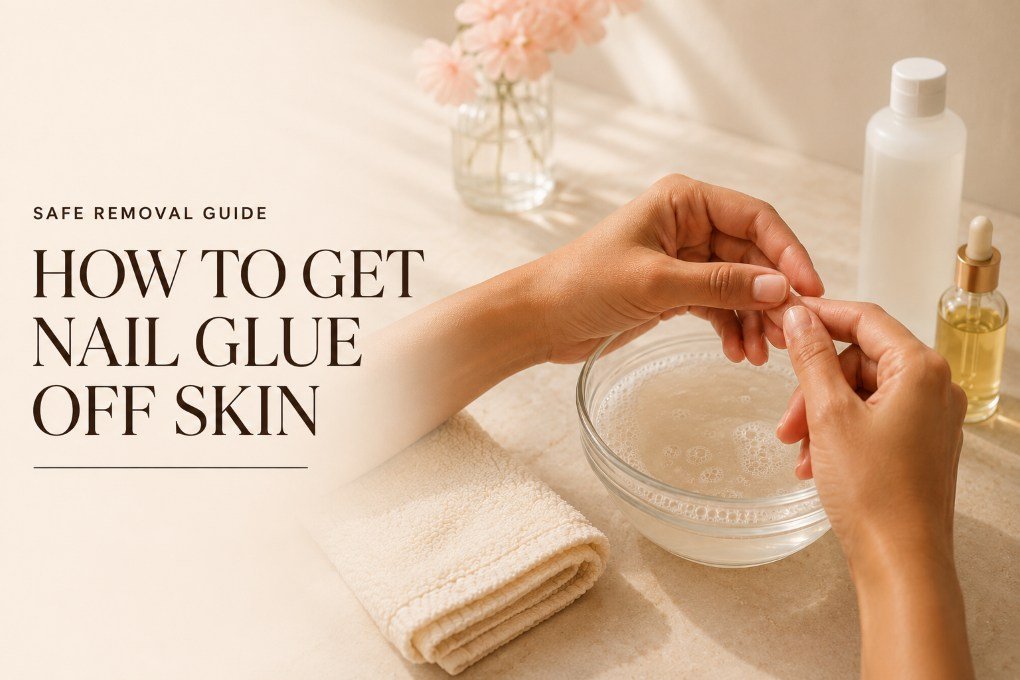
Add mild soap to a bowl of warm water and soak the affected area for 10 to 15 minutes. If the glue has already formed a thick shell, it may take more than one round. Warm water does not instantly dissolve cured nail glue, but it softens the surrounding skin and helps moisture work beneath the edge of the bond.
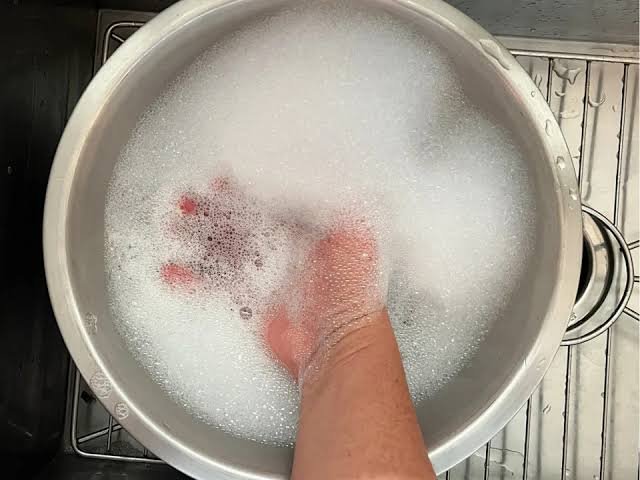
After soaking, test the glue with a light side-to-side massage. If it does not shift, return the skin to the water. Do not catch an edge with tweezers, scissors, or a cuticle nipper.
2. Massage in Oil or Petroleum Jelly
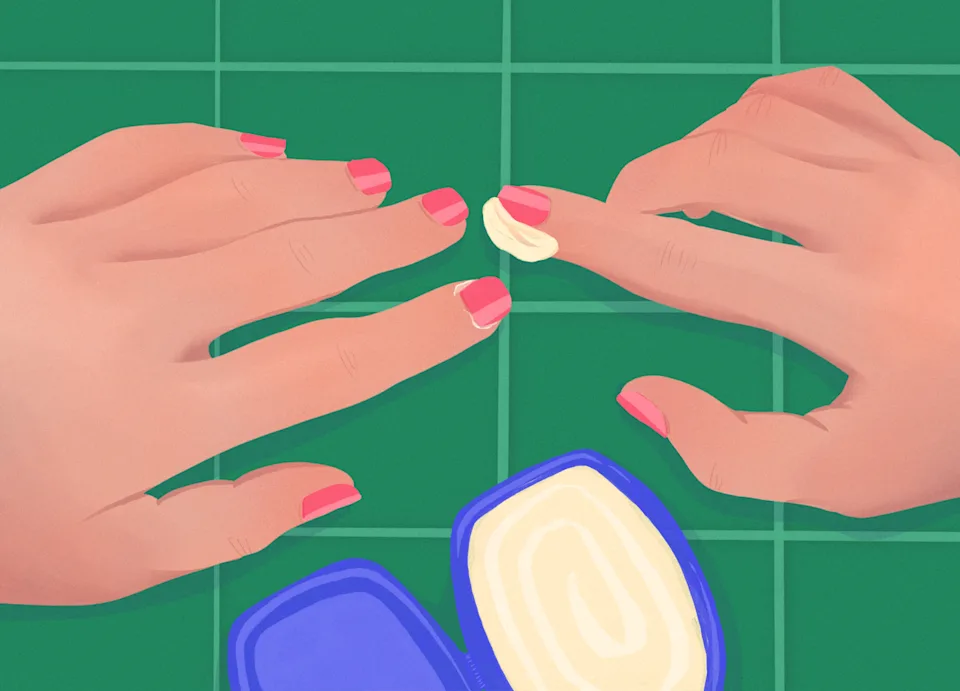
Dry the surrounding hand without rubbing the glued spot, then work oil or petroleum jelly around the glue’s edges. Massage slowly for several minutes. The lubricant can help creep between bonded surfaces, making this a useful acetone-free nail glue removal method for dry or sensitive skin.
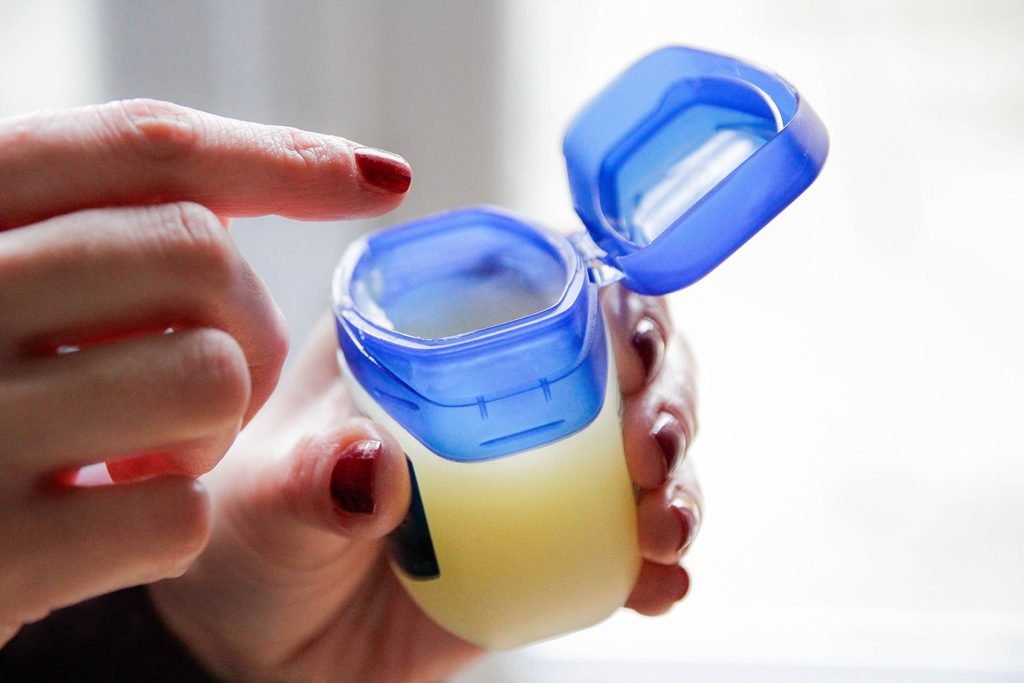
Reapply as the oil absorbs. A thick spot may need another warm-water soak followed by more oil rather than one forceful attempt. Poison Control lists mineral oil, vegetable oil, and petroleum jelly among the options that may shorten bonding time.
3. Roll the Loosened Glue Away
When the edge begins to lift, use the pad of another finger to roll or rub the glue sideways. If two fingers are stuck, move them gently back and forth instead of pulling them directly apart. Stop if the skin stretches, stings, changes color, or feels as though it may tear.
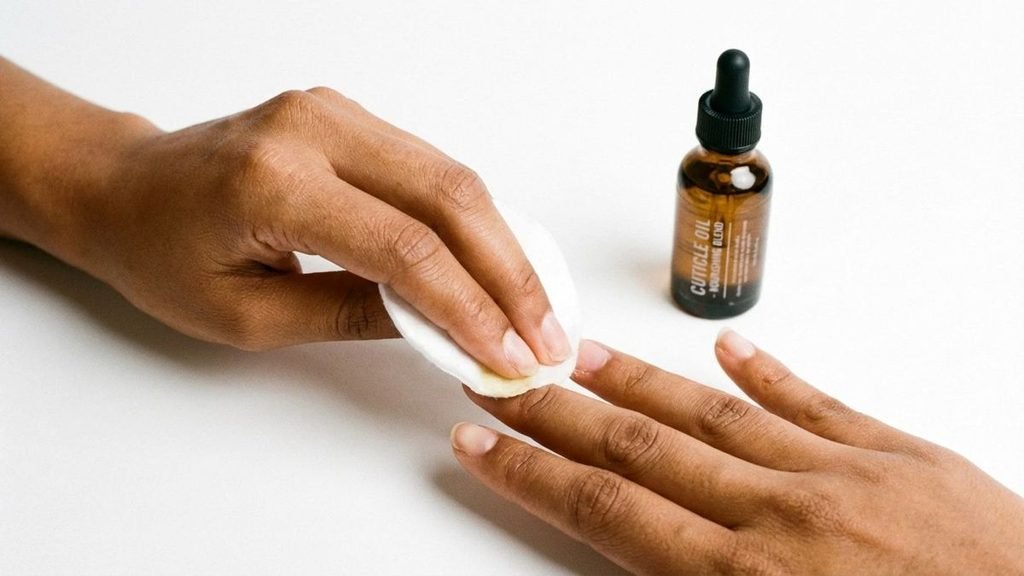
A few flecks may remain. It is safer to repeat the soak-and-oil cycle or let those flecks shed naturally than to remove the top layer of skin with them. Both Poison Control and MedlinePlus advise against forcing bonded skin apart.
4. Use Acetone Only for Stubborn, Dried Glue
If warm water and oil have not worked, acetone is the most direct solvent for cyanoacrylate. Use it only on intact skin, away from the eyes, lips, nostrils, cuts, inflamed cuticles, eczema, or a suspected burn. Work in a ventilated area and keep acetone away from flames and heat.
Once the nail glue is completely dry, pour a small amount of acetone-based remover into a glass or acetone-safe dish. Touch only the glued skin to it for several seconds, then massage the softened adhesive gently. Repeat briefly if needed instead of keeping the skin immersed. Do not use a cotton ball or cotton swab on wet, liquid nail glue because fresh cyanoacrylate can heat rapidly when it contacts cotton.
5. Wash, Dry, and Rehydrate
Wash the area thoroughly with soap and lukewarm water to remove acetone, oil, and loose residue. Pat dry, then apply hand cream and cuticle oil. Acetone removes natural oils along with the adhesive, so temporary dryness or tightness is common.
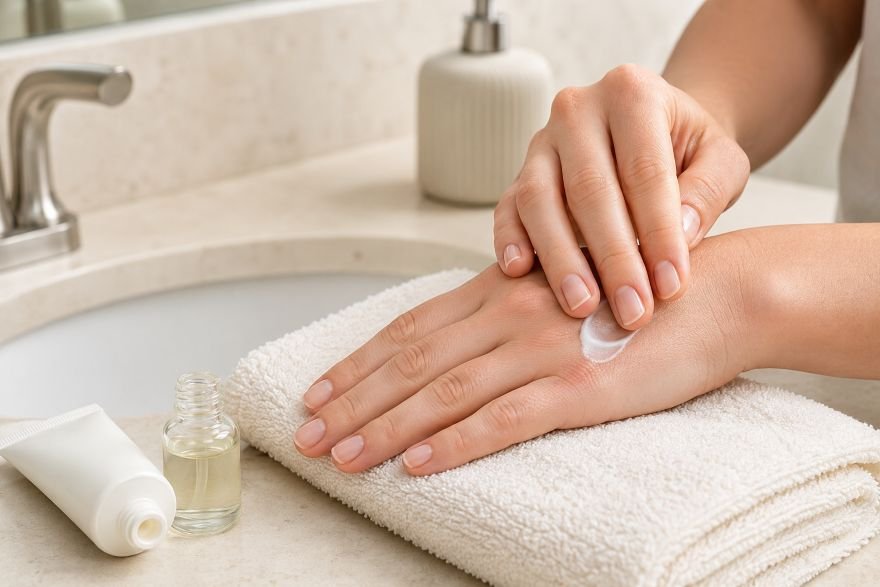
If the skin is tender, leave it bare and avoid more nail glue, polish remover, or fragranced products until it feels normal. Persistent redness, swelling, hives, cracking, or pain deserves medical advice.
Which Nail Glue Removal Method Should You Use?
| Situation | Best first method | What to know |
| Small fresh or partly dried spot | Warm, soapy water | Mildest starting point; repeat rather than scrub |
| Dried glue on dry or sensitive skin | Oil or petroleum jelly after soaking | Slower, but avoids acetone |
| Fully dried, stubborn glue on healthy intact skin | Small, brief acetone application | Fastest option; wash and moisturize afterward |
| Two fingers bonded together | Soak, lubricate, and move side to side | Never pull straight apart |
| Glue around a cuticle or under a nail edge | Repeated soaking and oil | Do not dig beneath the nail or cut the skin |
| Glue in an eye, mouth, wound, or on burned skin | Poison center or medical care | Do not attempt routine cosmetic removal |
| Wet glue on cotton or wool clothing | Cold, soapy water and urgent advice if hot or painful | Do not pull stuck fabric from skin |
The best method is the least aggressive one that releases the bond. Acetone may be quicker, but speed is not helpful if the surrounding skin is already cracked or irritated.
How to Get Nail Glue Off Skin Without Acetone
You can remove many small spots without acetone, but the process requires patience. Soak the skin in warm, soapy water for 10 to 15 minutes, massage vegetable oil or petroleum jelly around the hardened patch, and gently roll the softened edge. Repeat the cycle as needed. If the spot is not painful and no skin surfaces are stuck together, leaving the last thin film alone is also reasonable; normal moisture and skin shedding will gradually lift it.
Avoid replacing acetone with harsher household chemicals. Paint thinner, gasoline, adhesive remover intended for hard surfaces, household cleaners, and aerosol lubricants do not belong on skin. Lemon juice, vinegar, salt, and baking-soda scrubs appear in many home-remedy lists, but they can sting small cuts and add friction without offering the predictability of warm water, oil, or a skin-compatible remover.
An acetone-free approach is particularly sensible when the glue sits beside a hangnail, on already dry hands, or near irritated cuticles. If it remains firmly attached, stop for the day rather than escalating to scraping.
What to Do When Your Fingers Are Glued Together
Keep the bonded fingers relaxed and check that both fingertips remain warm and their normal color. Immerse them in warm, soapy water, then apply vegetable oil or petroleum jelly along the seam. Use a gentle back-and-forth or rolling movement to help the lubricant travel between the fingers. This may take repeated soaking and several minutes of patient movement.
Do not pull the fingers in opposite directions. A direct pull concentrates force on a small area and can tear live skin. Do not slide a blade, metal tool, or dental floss between them either. If the glue is fully dry, the skin is intact, and oil has failed, a little acetone may be worked along the outside seam before another gentle attempt.
Contact Poison Control or a clinician if the fingers remain tightly bonded, the skin becomes pale, blue, numb, increasingly swollen, or very painful, or the person is a young child. Loss of normal circulation is not a wait-and-see situation.
How to Remove Nail Glue Around Cuticles or Under the Nail Edge
Glue beside the cuticle needs a lighter touch than glue on the middle of a fingertip. Soak first, then massage cuticle oil along the sidewalls and proximal nail fold. Roll away only the part that lifts without resistance. Do not trim glued skin, push a metal tool into the cuticle pocket, or buff the skin with a nail file; these shortcuts can create tiny injuries around the nail.
For glue just beneath the free edge, keep the fingertip in warm, soapy water and let oil travel under the nail naturally. Do not dig underneath with an orange stick. If pain, redness, throbbing, drainage, or swelling develops over the following days, seek medical assessment because those symptoms can indicate inflammation or infection rather than harmless residue.
Glue sitting only on the hard natural-nail plate can tolerate a small amount of acetone better than surrounding skin, but protect the skin with petroleum jelly and keep contact brief. Never confuse residue on the nail plate with skin that has been bonded to the underside of an extension.
What Not to Do
- Do not peel or yank. Hardened glue can take the upper layer of skin with it.
- Do not scrape with a razor, scissors, tweezers, or cuticle nippers. A small glue spot is not worth a cut or infection.
- Do not scrub skin with a coarse file or pumice stone. It is difficult to judge when the glue ends and living skin begins.
- Do not pour acetone over broken, blistered, or burned skin. It can cause intense irritation and delay appropriate care.
- Do not use heat. Hot water and hair dryers increase discomfort and are unnecessary.
- Do not wipe liquid nail glue with cotton or wool. The fiber–cyanoacrylate reaction can produce dangerous heat; documented nail-glue burns have required medical treatment, as described in this peer-reviewed case report.
- Do not keep adding chemicals. Mixing removers, cleaners, oils, and abrasives makes irritation harder to identify and treat.
How Long Does Nail Glue Stay on Skin?
Removal time depends on the amount, whether two skin surfaces are bonded, and which method you use. A thin edge may loosen after one warm-water soak, while a thicker patch can take repeated treatment over several hours. Poison Control notes that water, oil, petroleum jelly, alcohol, or acetone may shorten the bonding time, but they can still take hours to work.
If only a harmless film remains, it does not need to be removed in one session. Sweat, natural skin oils, washing, and the shedding of surface skin cells gradually lift dried cyanoacrylate. Keep the area clean and moisturized, and resist picking at it. The important distinction is comfort: a painless film can wait; worsening pain, heat, blistering, numbness, swelling, or skin discoloration cannot.
Aftercare and When to Apply Press-Ons Again
Once the glue is gone, wash the area and apply a fragrance-free moisturizer. Add cuticle oil around the nail folds if they are dry, but skip exfoliating acids and aggressive buffing for a day or two. If acetone left the skin tight or chalky, reapply moisturizer after every hand wash until the barrier feels comfortable again.
Wait to use nail glue again until there is no redness, tenderness, cracking, open skin, or lingering irritation. Covering damaged skin with another press-on can trap moisture and make it harder to notice a problem. When the area has recovered, a well-fitted, manageable shape can make the next application easier to control; these short square nail ideas offer practical inspiration without requiring extra-long tips.
Seek medical advice if redness spreads, pain increases, blisters appear, the area drains fluid, or a rash persists. Cyanoacrylate exposure can irritate skin, and repeated contact may trigger a dermatitis-like reaction in some people.
How to Prevent Nail Glue From Getting on Your Skin
Choose a press-on that fits from sidewall to sidewall without pressing into the skin. Lay out all ten sizes before opening the glue, and apply a small, controlled amount to the nail or press-on according to the product directions. Keep adhesive away from the cuticle and sidewalls; if coverage is insufficient, it is safer to add a tiny amount than begin with a puddle that floods outward.
A brush-on bottle often gives more placement control than a wide dropper tip. Work over a silicone mat or another non-fabric surface, keep cotton towels and wool clothing away from open glue, and close the bottle between hands. Store it upright and out of reach of children and pets. Poison Control also recommends applying only a small amount at a time and using suitable protective finger coverings when practical.
If glue escapes during application, do not panic or wipe at the liquid with a cotton pad. Put the bottle down securely, keep the affected skin away from fabric, and begin with soapy water. Once your skin is fully comfortable, you can return to planning your next set through Nail Blooms’ manicure ideas.
Final Thoughts
The safest way to get nail glue off skin is to soften, lubricate, and roll—not scrape, cut, or pull. Warm, soapy water and oil handle many small spills; acetone is a useful backup for stubborn, fully dried glue on intact skin. A few remaining flecks can be left to shed naturally rather than removed at the cost of sore skin.
Treat location and symptoms as more important than the size of the mess. Glue near the eye or mouth, bonded skin with circulation changes, and any hot, blistering reaction—especially after contact with cotton or wool—needs expert advice. With a calm, gradual approach, an ordinary press-on glue mishap is usually manageable without damaging the skin around your manicure.